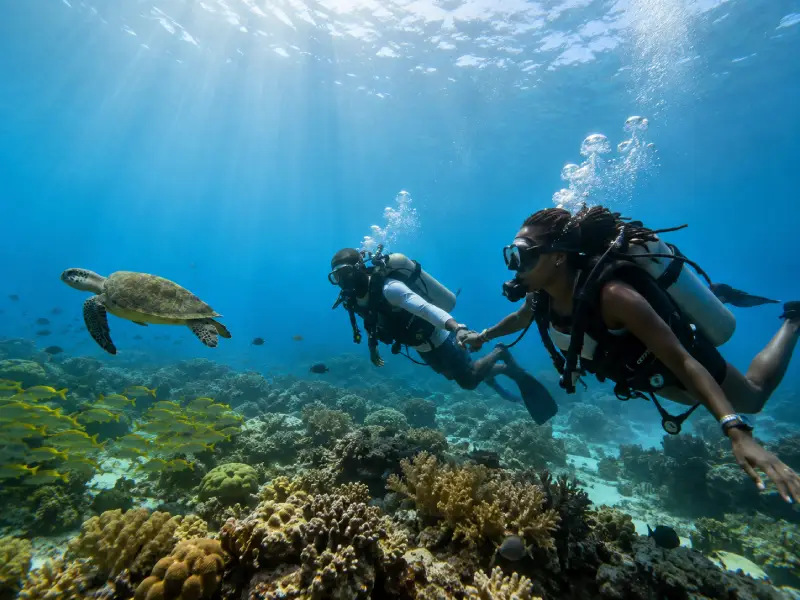
Kenya is famous for lions, but the better-kept secret sits about 20 minutes offshore. Below the surface of the Indian Ocean, you will find fringing reefs, coral gardens, resident turtles, a purpose-sunk wreck and, in the right months, whale sharks gliding past like slow-moving buses. Most visitors never see any of it, mainly because nobody has explained how the whole thing works.
Introducing…
Scuba Diving in Kenya Guide; Prices, Courses, Dive Sites, Safety and the Best Time to Go
 So, this guide does that. Inside you will find what diving in Kenya actually costs, which course fits your level, where the good dive sites are, when to travel, who is allowed to dive. Lastly, what a safe dive centre looks like and the one rule about altitude that catches out almost every Kenyan diver.
Read it before you book anything. Karibuni.
Where Can You Scuba Dive in Kenya?
Kenya’s dive scene runs along roughly 500 kilometres of coastline, and each stretch has its own character.
- 1. Diani and the south coast.The busiest and best-organised diving in the country. Reefs sit between about 7 and 25 metres deep, boat rides are short, and there is a purpose-sunk wreck for advanced divers. Kisite Mpunguti Marine Park lies further south near Shimoni, which is also where the dolphin and dhow trips depart. Start with our Diani destination page or the Best Scuba Diving Spots in Diani package.
2. Mombasa and the North Coast.
Mombasa Marine National Park and Reserve sits right off Nyali and Bamburi, so you can dive without a long transfer. Sites include coral gardens, sandy channels and reef walls, with turtles and reef sharks around.
See Best Scuba Diving Spots Mombasa or Scuba Diving Tours at Voyager Resort.
3. Watamu.
Quieter, prettier and arguably the best all-round marine destination in Kenya. Watamu Marine National Park protects a serious amount of life; green turtles are common, and humpback whales pass close to shore in the middle of the year.
Have a look at Watamu Scuba Diving Tours and Watamu Marine National Park Tours.
3. Malindi.
Kenya’s oldest marine park and a good option if you want reef diving with fewer boats around. See Malindi Scuba Diving Tours.
4. Lamu and Kilifi.
Diving here is possible but less commercial, so trips need arranging in advance rather than walking into a dive shop. If Lamu appeals, talk to us through Plan My Baecation and we will build it around your dates.
Scuba Diving Prices in Kenya: What to Budget.
Two things get charged separately, and mixing them up is where most budgets go wrong. Courses teach you to dive. Dive packages are for people who are already certified.
Diving Courses
| Course | Price (USD) | Roughly (KES) | Who it is for |
|---|---|---|---|
| Discover Scuba Diving | $200 | ~26,000 | Complete beginners trying diving for the first time |
| Open Water Diver | $565 | ~73,000 | Anyone who wants a full, lifetime certification |
| Advanced Open Water Diver | $510 | ~66,000 | Certified divers going deeper and into varied conditions |
| Rescue Diver | $540 | ~70,000 | Divers learning rescue, emergency response and safety skills |
| EFR (Emergency First Response) | $190 | ~25,000 | First aid, CPR and emergency response training |
Dive Packages for Certified Divers
| Package | Price per person (USD) | Roughly (KES) |
|---|---|---|
| 2 dives | $150 | ~19,400 |
| 4 dives | $250 | ~32,300 |
| 6 dives | $340 | ~44,000 |
| 8 dives | $430 | ~55,500 |
| 10 dives | $520 | ~67,200 |
Marine Park Fees.
 Dive sites inside a marine national park attract a Kenya Wildlife Service conservation fee, charged per person per entry. Under the KWS fee schedule that took effect in October 2025.
Marine parks include Kisite Mpunguti, Watamu, Mombasa, Malindi, Kiunga and Diani Chale. All are listed at roughly KSh 500 for East African citizens, KSh 675 for Kenya residents and USD 25 for non-residents, with children paying about half.
Some published summaries quote higher non-resident figures, so confirm the current rate on the KWS eCitizen portal before you travel. Payment is cashless, and you will need your original ID or passport.
Ask your dive centre whether park fees are already inside the quoted price. Sometimes they are, sometimes they are not, and that single question saves an awkward conversation on the boat.
What Else Adds Up.
Gear hire is usually included in course and package prices, though cameras, private guides and photographers are extra. Have a look at our add-ons if you want an underwater photographer along, because most couples regret not having pictures.
Transport, accommodation and meals are separate again, which is exactly what our packages are built to bundle.
Which Course Should You Actually Take?
Here is the shortest honest answer to the question we get most.
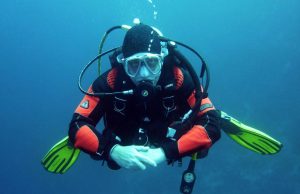 Never dived before and not sure you will like it?
Take Discover Scuba Diving. You get a short briefing, a shallow session and one supervised dive, all with an instructor beside you the whole time. It is not a certification, so it does not carry over, but it tells you within an hour whether diving is your thing.
Fairly sure you will love it?
Skip straight to Open Water Diver. The maths is simple; a Discover Scuba dive plus a full course later costs more than just doing the course now. Open Water certification never expires, and it is recognised worldwide, which means the coast of Kenya, the Red Sea and Zanzibar all open up on the same card.
Already certified and just want to dive?
Book a dive package. Two dives suit a weekend, while four to 6 dives suit a proper week at the coast.
Certified but out of practice?
If it has been more than a year since your last dive, ask for a refresher or scuba review session before the first boat dive. Any good centre will suggest it before you do.
Want to keep going?
Advanced Open Water opens up deeper sites and wrecks, and Rescue Diver is the course most divers say changed how they think underwater. EFR is a first aid qualification in its own right, so it is useful whether or not you dive again.
The Dive Sites You Will Actually Visit.
Two sites come up again and again for divers on the south coast, and both suit couples with mixed experience levels.
Kisima Mungu.
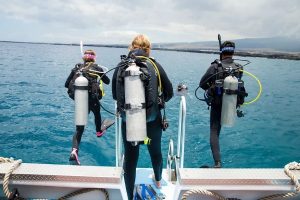 The name means “God’s Well” in Kiswahili. It is a long fringing reef that slopes from the shallows down to around 24 metres, known for turtles, stingrays, guitar rays, huge schools of glassfish and macro life like ghost pipefish and leaf scorpionfish.
A white-tip reef shark is sometimes seen resting deeper down. Conditions change with the tide; on calm days it suits less-experienced divers, and when there is some movement the guides can run it as a drift dive, which means the current does the swimming for you.
Milele.
Another fringing reef starting shallow and sloping to about 25 metres, so it works for both experienced and newer divers. Currents are usually light or absent, and a drift dive is possible when conditions allow.
Elsewhere along the coast you will hear about the MV Alpha Funguo wreck off Diani, which was sunk deliberately and is now an artificial reef for advanced divers. Plus Kinondo Reef for bigger fish and Tiwi Wall for deeper diving. Watamu has The Canyon and Turtle Reef, and Kisite is where leopard sharks, reef sharks and dolphins turn up most reliably.
Best Time for Scuba Diving in Kenya.
Season matters more than most people realise, because the monsoons decide your visibility.
| Period | Conditions | Worth knowing |
|---|---|---|
| October to March | Peak season. Calm seas, warm water and visibility that can reach 30 metres | Best all-round diving. Whale sharks and dolphins are most likely |
| January to March | Consistently clear and calm | Whale sharks and manta rays peak in this window |
| April to June | Long rains and the Kusi monsoon build. Rougher seas and reduced visibility | Low season. Ideal for courses and quieter dive groups |
| July to September | Seas settle again, though visibility is variable | Humpback whales migrate past the Kenyan coast, especially off Watamu |
Water sits between about 25 and 30 degrees all year, which is why nobody here dives in a thick wetsuit. For whale sharks specifically, November through February is the window most operators quote, with larger animals more common from January onwards.
Humpbacks pass between July and September and peak in August, so the “quiet” mid-year months have their own reward.
One quiet advantage of low season: if you want an Open Water course with almost private attention, May and June are excellent. Fewer divers, fewer interruptions and instructors with time on their hands.
Who Can Dive? Age, Health and Swimming.
This is where people quietly worry, so let us be direct.
Age.
The minimum age for Discover Scuba Diving and for entry-level certification is generally 10 years old. Divers aged 10 to 14 earn a junior certification with depth limits, which upgrades automatically at 15. There is no upper age limit.
Medical.
Everyone completes a short medical questionnaire before diving. Answer no to everything, and you are cleared to start. Answer yes to anything, and you will need a doctor to assess the condition and sign a fitness-to-dive form.
Conditions that commonly need sign-off include asthma, heart problems, epilepsy, diabetes, recent surgery and any ear or sinus issues. Pregnancy is the one clear no; divers who are pregnant or trying to conceive should not dive at all.
A cold is not a small thing.
Blocked ears and congestion make it impossible to equalise safely, and pushing through it can injure your eardrum. If you wake up stuffy on dive morning, say so.
Swimming.
For a Discover Scuba dive you need to be comfortable in water and able to hold yourself at the surface, though you do not need to be a strong swimmer. For a full Open Water certification you will need to show basic water skills, typically a swim of a few hundred metres and a period of floating. Ask your operator exactly what their test involves so you can practise beforehand.
Alcohol.
No diving with a hangover. Dehydration is one of the biggest risk factors for decompression sickness, so save the celebration for after the last dive of the day.
What a Dive Day Actually Looks Like.
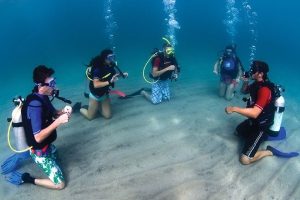 Mornings start early, usually because the sea is calmest before the wind picks up. Expect a pickup from your hotel, paperwork and a medical form at the dive centre, then a gear fitting and a briefing that covers the site, hand signals, depth limits and the plan.
Boats along the coast are typically speedboats with a shaded area, and the ride to most south coast sites takes between 5 and 40 minutes. A single dive lasts around 45 minutes, though your air consumption sets the real limit. Between two dives you take a surface interval of about an hour, which is usually spent drifting, drinking water and swapping stories.
Group sizes matter more than most first-timers realise. Good centres cap experienced divers at around four per guide and less-experienced divers at two per guide, which means someone is genuinely watching you rather than counting heads. Ask about the ratio before booking, not after.
Safety: What a Good Dive Centre Looks Like.
You cannot inspect a compressor yourself, so use this checklist instead. A dive centre worth your money will tick every one of these.
- Recognised certification. Instructors and guides certified by SSI, PADI or another recognised agency. Ask to see it. Nobody serious will be offended.
- Oxygen and first aid on the boat. Emergency oxygen should be on board for every single trip, not stored back at the shop.
- Surface marker buoys carried by guides. An SMB is how a boat finds you if you surface away from the group.
- Tanks in good condition and up to date. New or well-maintained tanks, serviced regulators and BCDs that hold air.
- Small groups. Two to four divers per guide, depending on experience.
- A conditions check before every dive. Sea state and weather assessed on the day, every day.
- A willingness to cancel. This is the big one. A centre that calls off a dive because conditions are unsafe is a centre that will look after you. A centre that never cancels is selling dives, not managing risk.
- A clear medical plan. They should be able to tell you, without hesitating, where the nearest hospital is and how a diver would be evacuated.
On evacuation, a hyperbaric chamber is available in Mombasa for emergency treatment, and dive centres along the coast plan around that. Availability at any single facility can change, so ask your operator to confirm the current arrangement when you book.
Separately, consider dedicated dive insurance such as DAN cover, since standard travel insurance often excludes diving or caps it at shallow depths. Check your policy wording rather than assuming.
The Altitude Rule Almost Nobody Tells Kenyan Divers.
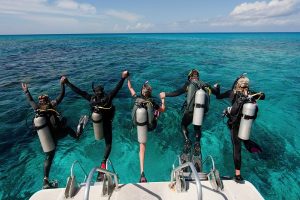 This is the most important section in this guide, and it is the one you will not find in most Kenyan dive listings.
After diving, your body still holds dissolved nitrogen. Reduce the pressure around you too quickly and that nitrogen can form bubbles, which causes decompression sickness. Flying does this. So does going up a mountain. So does driving inland.
The consensus guidelines from the Divers Alert Network are these. Wait at least 12 hours after a single no-decompression dive before flying. Wait at least 18 hours after multiple dives in a day or diving across several days. Wait 24 hours or longer after any dive that required decompression stops. Many divers simply plan a full 24 hours and treat the last day as a rest day.
Now the Kenyan part. Those same guidelines apply to going to altitude by road, not only by air, and the threshold commonly used is around 600 metres above sea level. Nairobi sits at roughly 1,800 metres. The road and the SGR line from Mombasa both climb well past 600 metres long before you reach the city. In practice that means:
- Diving on Sunday morning and catching an afternoon flight to Nairobi is a bad plan.
- Diving on Sunday morning and driving or taking the train up-country the same afternoon carries the same risk, even though it feels slower and safer.
- Adding a safari straight after a dive trip needs thought too, since Amboseli, Nakuru and the Masai Mara all sit well above that line.
The fix costs you nothing. Put your diving early in the trip and keep the final day flat, quiet and at sea level. Snorkelling, a dhow cruise or a lazy beach day all work perfectly. When we build a coast itinerary that includes diving, we sequence it this way by default, because a ruined trip is a bad memory and a case of the bends is far worse.
What to Pack.
Dive centres provide the technical gear, so your packing list is short.
- Swimwear, a rash guard and a towel
- Reef-safe sunscreen, plus a hat and sunglasses for the boat
- Seasickness tablets taken about an hour before departure, especially between April and July
- Your certification card and logbook if you are already certified
- Prescription details if you wear contact lenses, since soft lenses are usually fine underwater but worth mentioning
- Cash or M-Pesa for park fees, tips and drinks
- A dry bag for phones, because spray gets everywhere
Leave the jewellery at the hotel and skip a heavy breakfast. A light meal and plenty of water beat a full plate on a rolling boat.
Making It Romantic; Diving as Part of a Coast Getaway.
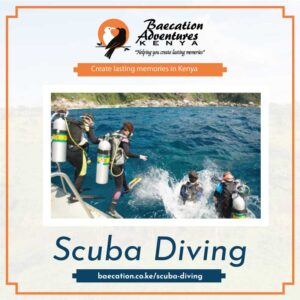 Diving is wonderful, though it is rarely the whole trip. The couples who enjoy it most build a few days around it, and the Kenyan coast is unusually good at that.
Diani is the easiest place to combine everything. Mornings go to the reef, afternoons to the beach and evenings to a private dinner on the sand. Add a full day to Kisite Mpunguti Marine Park or a Wasini Island dolphin trip, and you have a week that never repeats itself. If budget is a factor, our affordable romantic getaways in Diani show how far a modest spend goes.
Mombasa suits shorter trips, especially over a long weekend using the SGR. Marine park diving sits minutes from the north coast hotels, and Old Town, Fort Jesus and Swahili food fill the hours between. Browse Mombasa or the Mombasa Marine Park tours.
Watamu is the pick if you want quiet. Turtles, a protected marine park, whales in season and a shoreline that stays gentle. Pair Watamu boat tours with a few dives and very little else.
Lamu trades reefs for atmosphere. Dhows, sand streets, rooftop dinners and a pace that forces you to slow down. Diving takes more arranging here, so tell us early, and we will sort it. Start at the Lamu page.
Two more things worth planning deliberately. First, the partner who does not dive. This is the most common tension we see, and it has an easy fix; while one of you dives, the other snorkels the same reef from the surface. Visibility along this coast is good enough that snorkellers see turtles, rays and most of the reef fish. Our snorkelling tours and glass-bottom boat trips exist for exactly this reason.
Second, the evenings. A sunset dhow cruise and a private beach dinner are the two things couples remember longest, and both need booking ahead rather than arranging on the day. We fold them into honeymoons, anniversaries, proposals and ordinary getaways all the time.
Common Mistakes to Avoid.
- Booking a dive on your last day. Covered above, and it is the mistake with the highest cost. Keep the final day at sea level.
- Travelling in May or June expecting 30-metre visibility. The Kusi monsoon does not care about your itinerary. Travel then by all means, but come for a course rather than for photography.
- Not declaring a health condition. People stay quiet because they are afraid of being turned away. Most conditions are cleared with a doctor’s signature, so declare early and get sorted before you travel rather than at the dive shop.
- Assuming park fees are included. Ask once at booking, and the question disappears.
- Choosing a Discover Scuba dive when you already know you want certification. You end up paying twice for the same shallow water.
- Ignoring the group size question. A guide with eight divers cannot watch any of them properly.
- Diving after a heavy night. Dehydration and diving do not mix.
- Turning up without booking. Boats leave early and fill up in high season. Slots for courses in particular need days, not hours, of notice.
Frequently Asked Questions about Scuba Diving Tours in Kenya.
How much does scuba diving cost in Kenya?
An introductory Discover Scuba Diving experience costs around $200, roughly KES 26,000. Full Open Water certification runs about $565, roughly KES 73,000. Certified divers pay from $150 for two dives up to $520 for a ten-dive package. Marine park conservation fees and transport are usually charged separately.
Do I need to know how to swim to scuba dive?
For a Discover Scuba Diving experience, you need to be comfortable in water and able to keep yourself at the surface, though strong swimming is not required. Full Open Water certification includes a basic swim and float assessment, so ask your operator what theirs involves.
What is the best time of year to dive in Kenya?
October to March gives the calmest seas and the clearest water, with visibility reaching up to 30 metres. Whale sharks are most likely between November and February. Humpback whales pass the coast between July and September. April to June is low season with rougher seas, which makes it a good and quiet time to take a course.
How long after diving can I fly or travel to Nairobi?
Wait at least 12 hours after a single dive and at least 18 hours after multiple dives or several days of diving. The same rule applies to travelling to altitude by road or rail, and Nairobi sits at about 1,800 metres. Many divers simply allow a full 24 hours to be safe.
Where are the best dive sites in Kenya?
Diani has the widest choice, including Kisima Mungu, Milele, Kinondo Reef and the MV Alpha Funguo wreck. Mombasa Marine Park sits minutes offshore from the north coast hotels. Watamu is the quietest and richest of the marine parks, while Kisite Mpunguti near Shimoni is the most reliable for dolphins and reef sharks.
Can beginners scuba dive in Kenya?
Yes. Discover Scuba Diving is designed for people who have never dived, with an instructor beside you throughout and a maximum depth of about 12 metres. The minimum age is generally 10.
What if my partner does not want to dive?
Book snorkelling or a glass-bottom boat trip on the same excursion. Kenyan reefs start shallow, so snorkellers regularly see turtles, rays and reef fish while their partner dives the same site. It is the arrangement we set up most often.
Is scuba diving in Kenya safe?
Diving here has a good record when you dive with a properly certified centre. Look for recognised instructor certification, oxygen and first aid on the boat, surface marker buoys, well-maintained tanks, small groups and an operator prepared to cancel in poor conditions. A hyperbaric chamber is available in Mombasa for emergencies, and dedicated dive insurance is worth having.
Ready to Plan Your Dive Trip?
Baecation Adventures can put the whole thing together; the dives, the certification, the transfers, the hotel and the evenings that make it a holiday rather than a course. Tell us your dates and your experience level, and we will sequence it properly, altitude rule included.
View our scuba diving tours or plan a custom trip. Payment plans are available through our payment plans page.