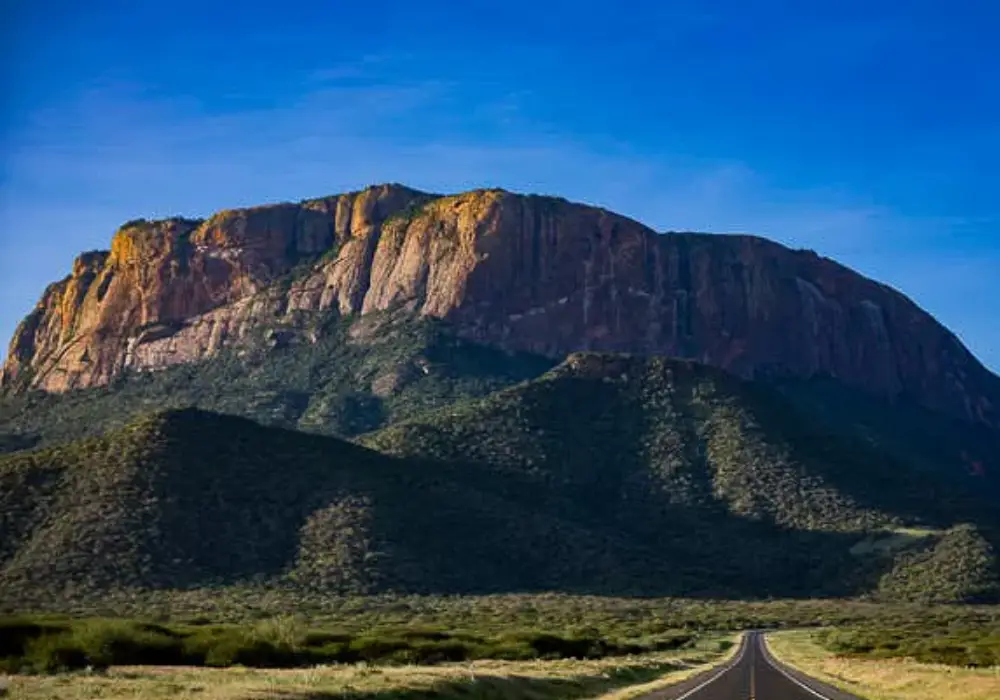
Rising nearly 700 metres straight out of the Samburu plains, Mount Ololokwe — known locally as Ol Donyo Sabache. First, it is one of the most striking sights in northern Kenya, and one of the best day hikes you can add to a Samburu safari.
Secondly, It’s sacred to the Samburu people, who still climb it to pray. Thirdly, the sunrise view from the top, with the plains stretching out toward Mount Kenya on a clear day. In other words, it is the kind of thing that’s hard to describe until you’ve stood there yourself.
Mount Ololokwe Hike: The Complete Day-Trip Guide to Prices, Location & What to Expect.
We’ve had a growing number of calls at Baecation Adventures asking about the Mount Ololokwe hike. People want to know how to get there, what it costs, and whether it’s worth adding to a Samburu itinerary. So here’s everything you need to plan it properly, including the current 2026 rate card and a few mistakes worth avoiding.
 Mount Ololokwe at a Glance.
- Location: Namunyak Conservancy, Samburu East, Kenya
- Distance from Nairobi: about 340 km, via Nanyuki, Isiolo, and Archer’s Post
- Summit elevation: about 2,000 metres, with roughly 1,000 metres of elevation gain
- Hike duration: 3 to 4 hours one way
- Guide: required, and charged per guide rather than per person
- Best time to climb: before dawn, during the drier months (January to March and June to October)
- Recommended trip length from Nairobi: at least 2 days
Why Mount Ololokwe Is Worth the Detour
For the Samburu people, Ololokwe isn’t just scenery. Elders still climb it to pray. For generations, the mountain has supplied water, grazing, and shelter to Samburu communities and their livestock.
Namunyak Conservancy manages the land together with the Sabache community, and it was formed to protect that relationship between people, wildlife, and the mountain. As a result, the fees you pay at the gate go directly back into the community and into conservation work, rather than into a national park budget.
The conservancy is also genuinely wild country. It’s home to elephant, reticulated giraffe, gerenuk, and other species adapted to this dry, rocky landscape. So keep your eyes open on the drive in, not just on the trail itself.
Where Is Mount Ololokwe Located?
Mount Ololokwe sits in Namunyak Conservancy, in Samburu East, on land held by the Sabache community. It’s roughly 340 km from Nairobi. To get there, you drive north through Nanyuki and Isiolo, then continue on the Isiolo-Marsabit road toward Archer’s Post, where a turn-off leads to Sabache Camp at the base of the mountain.
Because of the distance, we recommend at least 2 days for the trip if you’re travelling from Nairobi. Day 1 covers the drive north and settling in near the base. Day 2 is for the hike itself, since it’s best started before sunrise. That said, the climb itself only takes a single morning. Most of our guests add it onto a Samburu safari, rather than treating it as a separate trip. That way, you’re already based near Archer’s Post or Samburu National Reserve, and the hike simply becomes one morning of a longer stay.
The Isiolo-Marsabit road and the wider Samburu East area are used regularly by guided safari operators. As with any trip in this part of Kenya, daytime travel with a licensed operator is the standard, sensible way to go, and it’s how we run our own Ololokwe trips.
Getting there: Open Sabache Camp’s location on Google Maps. If you’re driving yourself, plan to arrive at the base the evening before the climb.
Mount Ololokwe Rate Card: What to Budget.
Fees are charged separately for entry, conservancy, camping, guiding, and meals. Rates also differ depending on whether you’re a Kenyan citizen, a resident, or a non-resident visitor.
Entry & Conservancy Fees.
| Service | Citizens | Residents | Non-Residents |
| Entrance Fee | KSh 1,500 | KSh 2,000 | USD 40 |
| Conservancy Fee | KSh 800 | KSh 2,000 | USD 30 |
Camping & Guiding
| Service | Citizens | Residents | Non-Residents |
| Camping Fee | KSh 1,500 | KSh 2,000 | USD 30 |
| Guide Fee | KSh 3,000 | KSh 4,000 | USD 25 |
Camping Tents
| Tent Type | Rate |
| Single Camping Tent | KSh 2,000 |
| Sharing Camping Tent | KSh 2,500 |
Meals
| Meal | Rate per Person |
| Breakfast | KSh 800 |
| Lunch | KSh 1,200 |
| Dinner | KSh 1,500 |
Vehicle Entry
| Service | Rate |
| Vehicle Entrance Fee | KSh 500 per vehicle |
A couple of things are worth knowing before you budget. First, the guide fee is charged per guide, not per person, so it works out cheaper if you’re hiking as a group and sharing one guide.
Second, entrance, conservancy, and camping fees are all charged separately, and they add up quickly. If you’re planning to camp overnight rather than hike and leave, factor in all four. Alternatively, skip the arithmetic altogether: Baecation Adventures’ Mount Ololokwe package bundles transport, guiding, meals, and camping into a single price.
What the Hike Is Actually Like.
The climb to the summit covers around 6 km one way. The elevation gain is close to 1,000 metres, and most hikers reach the top in 3 to 4 hours, depending on fitness. It’s rated a moderate hike. There’s nothing technical about it, but the gradient and the heat lower down make it a proper workout rather than a stroll.
A guide is required for the climb, and this isn’t just a formality. The trail isn’t always obvious, and guides know both the mountain’s history and the routes that locals and their livestock have used for generations. Most hikers start well before dawn. The goal is to reach the summit as the sun comes up over the Samburu plains, then descend before the late morning heat sets in.
At the top, you’re rewarded with a flat plateau and sweeping views over the Samburu plains. On a clear day, you can see Mount Kenya in the distance, and if your timing is right, you’ll also catch a genuinely spectacular sunrise. Take your time up there before heading back down. The descent is quicker than the climb, but loose scree on some sections means it still deserves your full attention.
Best Time to Do the Ololokwe Hike.
Northern Kenya is hot and dry for most of the year, so the biggest factor isn’t the season. It’s your timing within the day. Start the climb between 3 and 4 a.m. if you want the sunrise summit experience. Alternatively, start at first light if you’d rather skip the early wake-up. Either way, aim to be off the mountain before midday, when the lower slopes get uncomfortably hot.
The drier months, roughly January to March and June to October, offer firmer footing and clearer views. During the long rains in April and May, the trail can get slippery, and the Isiolo-Marsabit road is also more likely to give you trouble.
What to Carry for the Ololokwe Hike.
- Comfortable hiking shoes or sturdy trainers
- Light, comfortable clothing suitable for hiking
- Hat or cap and sunglasses
- Sunscreen and personal toiletries
- At least 2–3 litres of drinking water per person
- Snacks or energy bars for the hike
- A light jacket or warm layer for early morning or evening
- Insect repellent
- Personal medication and a basic first-aid kit
- Headlamp or flashlight, especially if you start before dawn
- Sleeping bag, if camping and not hiring bedding
- Camera or binoculars for photography and wildlife viewing
- Identification documents and any booking or payment confirmation
Common Mistakes to Avoid
- Starting too late. If you miss the early departure, you’ll end up climbing through the hottest part of the day. That makes an otherwise manageable hike far harder than it needs to be.
- Skipping the guide. Beyond being required, a guide keeps you on the right trail. Just as importantly, they add real context, since this is a culturally significant site and not just a viewpoint.
- Underestimating the drive. The 340 km from Nairobi takes the better part of a day on its own. So pair the hike with a Samburu stay, rather than trying to drive up and back in a single day.
- Not carrying enough water. There’s little shade and no reliable water source on the trail. So bring more than you think you’ll need.
- Forgetting that the vehicle and camping fees are separate. If you’re driving yourself and staying overnight, budget for entrance, conservancy, camping, guide, tent hire, meals, and the vehicle fee individually. These aren’t bundled unless you book a package.
Frequently Asked Questions
Where is Mount Ololokwe located?
Mount Ololokwe, also called Ol Donyo Sabache, is in Namunyak Conservancy, Samburu East, about 340 km from Nairobi via Nanyuki, Isiolo, and Archer’s Post.
How much does the Mount Ololokwe hike cost?
Entrance and conservancy fees start at KSh 1,500 and KSh 800 for Kenyan citizens. Camping, guiding, tents, meals, and vehicle entry are all charged separately, and residents and non-residents pay higher rates. See the full rate card above, or book a package that bundles everything together.
Can Mount Ololokwe be done as a day hike?
Yes, the climb itself is a single morning’s effort. Most hikers reach the summit in 3 to 4 hours and descend the same morning. However, since Ololokwe is about 340 km from Nairobi, we recommend budgeting at least two days for the full trip: one day to travel and settle in, and one day for the hike. It works best as part of a longer Samburu safari, rather than a stand-alone day trip from Nairobi.
Do you need a guide to climb Mount Ololokwe?
Yes. A guide is required, and the fee is charged per guide rather than per person, so it’s more affordable in a group.
What is the best time to hike Mount Ololokwe?
Start before dawn or at first light, so you can reach the summit before the heat sets in. The drier months, roughly January to March and June to October, offer firmer trails and clearer views.
Is it safe to travel to Mount Ololokwe?
Yes. The Isiolo-Marsabit road and the wider Samburu East area are used regularly by guided safari operators. As with any trip in this part of Kenya, daytime travel with a licensed operator is the standard, sensible way to go.
Ready to Climb Mount Ololokwe?
Baecation Adventures can put together your full Mount Ololokwe trip as part of a Samburu safari. We arrange transport, guiding, meals, and camping for you. View the Mount Ololokwe Climbing Tours package or get in touch, and we’ll help you plan it. Karibu.